

20 Best Things to Do in Montenegro: A Complete Travel Guide for Every Type of Traveler
Montenegro fits into three hours of driving. What those three hours pass through is extraordinary.
A UNESCO-listed medieval bay. The deepest canyon in Europe. Glacial lakes in a national park that most visitors never reach. An Orthodox monastery carved into a limestone cliff at 900 metres. Adriatic beaches that rival Croatia and Greece at half the price.
This is one of Europe’s most underrated countries, and right now it is still genuinely affordable, still manageable without crowds if you time it right, and still full of places that feel discovered rather than packaged.
This guide covers the 20 best things to do in Montenegro with exact costs, the best timing for each, and the insider tips that most travel guides skip.
Table of Contents
What Are the Best Things to Do in Montenegro?
| # | Activity | Location | Cost | Best For |
|---|---|---|---|---|
| 1 | Kotor Old Town | Kotor | Free to wander | History, architecture |
| 2 | Kotor Fortress hike | Kotor | €3 | Views, fitness |
| 3 | Bay of Kotor boat trip | Kotor harbour | €25–45 | Scenery, coastal views |
| 4 | Perast + Our Lady of the Rocks | Bay of Kotor | €5 ferry | History, photography |
| 5 | Montenegro beaches | Budva Riviera | Free–€15/day | Swimming, relaxation |
| 6 | Budva Old Town | Budva | Free to wander | History, beaches |
| 7 | Sveti Stefan viewpoint | Budva Riviera | Free | Photography, sunsets |
| 8 | Durmitor National Park | North Montenegro | €3 entry | Hiking, nature |
| 9 | Black Lake walk | Durmitor | Included in park | Nature, photography |
| 10 | Tara Canyon zipline/rafting | Đurđevića Tara | €20–80 | Adventure, adrenaline |
| 11 | Durmitor Ring drive | North Montenegro | Car only | Scenic drive |
| 12 | Lake Skadar boat trip | Virpazar | €15–25 | Nature, birdwatching |
| 13 | Lovćen National Park | Above Kotor | Free entry | Panoramic views |
| 14 | Ostrog Monastery | Zeta Valley | Free | Culture, pilgrimage |
| 15 | Herceg Novi | Bay of Kotor | Free to explore | Hidden gem |
| 16 | Bar + Stari Bar ruins | Southern coast | €2 entry | Ruins, history |
| 17 | Podgorica city visit | Capital city | Free to explore | Transit hub |
| 18 | Petrovac village | Budva Riviera | Free | Quiet coastal escape |
| 19 | Ulcinj + Velika Plaža | Southern coast | Free | Long beach, kite surfing |
| 20 | Traditional Montenegrin food | Everywhere | €8–20 per meal | Food lovers |
Explore Kotor Old Town
Cost: Free to enter and explore
- Time needed: 2–3 hours minimum, half a day ideally
- Best time: Early morning (8–9am) before cruise ship crowds arrive, or evening after 6pm
- Insider tip: Enter through the Sea Gate (Vrata od Mora) and immediately turn left this avoids the main tourist street and takes you into the quieter residential quarters
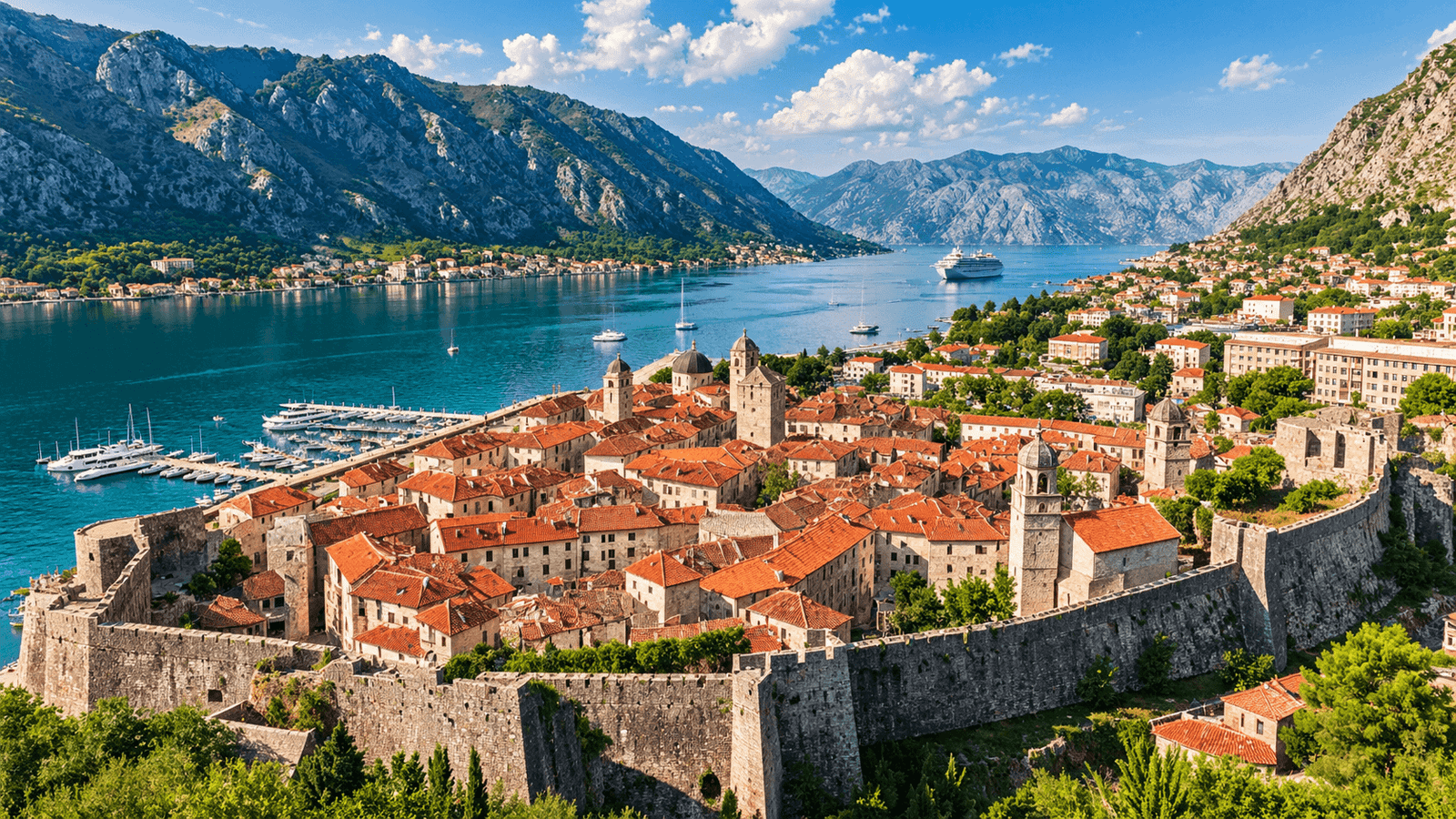
Kotor Old Town is the undisputed highlight of Montenegro and one of the most beautiful medieval cities in Europe. A perfectly preserved Venetian-era walled city tucked into the corner of the Bay of Kotor, surrounded on three sides by the ancient walls and on the fourth by the bay itself.
The old town covers just 8 hectares small enough to know well in an afternoon, complex enough to explore for days. The Cathedral of Saint Tryphon (built 1166, rebuilt after the 1667 earthquake) is the architectural centrepiece; its twin Romanesque bell towers are visible from anywhere in the old town. The Church of Saint Luke (12th century) shares its interior between Catholic and Orthodox faiths. The Maritime Museum traces Kotor’s 2,000 years as a Venetian and Austro-Hungarian naval port.
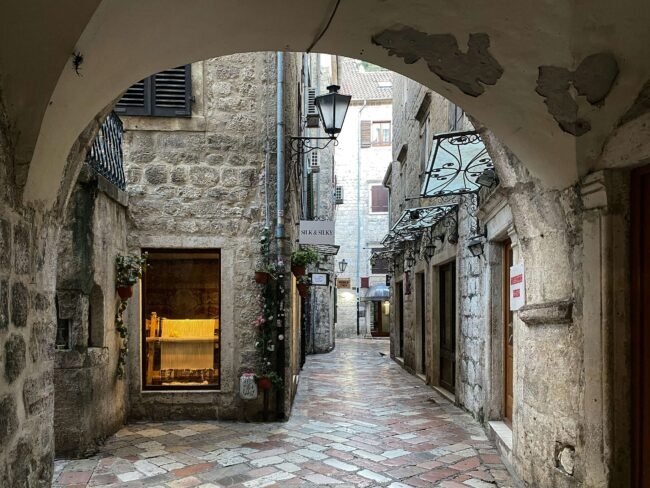
Beyond the monuments, Kotor Old Town is genuinely still lived in. Residents hang laundry from windows above the tourist streets. Cats Kotor is famous for its cats, with a dedicated cat museum sleeping on every warm stone surface. The evening transformation, when day-trippers leave and the restaurants fill with staying guests, is worth planning your accommodation around.
Things to do in Kotor Montenegro specifically:
- Cathedral of Saint Tryphon entrance €2.50
- Kotor Maritime Museum entrance €4
- Church of Saint Luke free
- Walk the complete city walls circuit (1.5km, free)
- Cats of Kotor Museum entrance €1
Hike to Kotor Fortress for Panoramic Views
- Cost: €3 entrance fee
- Time needed: 1.5–2 hours (up and down)
- Difficulty: Moderate 1,350 steps, steep in sections
- Best time: Sunrise (6–8am) or late afternoon (4–6pm) avoid midday heat and cruise ship crowds
- What to bring: Water (minimum 1 litre), proper shoes, sun protection
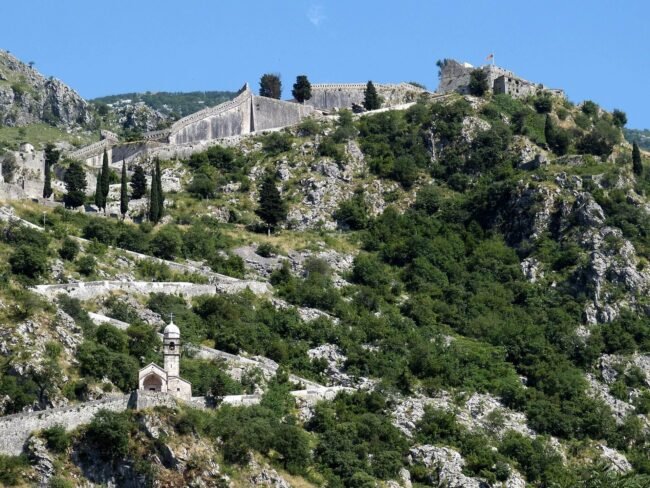
The trail to St John’s Fortress begins inside the old town walls near the Church of Our Lady of Remedy. From the entrance gate, 1,350 uneven stone steps wind upward through medieval watchtowers, crumbling gate structures, and increasingly dramatic views of the bay below.
The fortress itself built originally by the Byzantines, expanded by the Venetians is partially ruined but the views from the top are the real reward. The entire Bay of Kotor unfolds below: the city walls visible from above, the bay stretching toward the Adriatic, and the limestone peaks of the Dinaric Alps rising on every side.
Honest advice: The climb takes 45–60 minutes at a moderate pace. It is genuinely steep in the upper sections. Starting early by 10am the path is crowded with cruise ship passengers and the exposed sections become brutally hot. Sunrise is the ideal time: the light on the bay is extraordinary and you will likely have the upper fortress entirely to yourself.
Take a Boat Trip Across the Bay of Kotor
- Cost: €25–45 for half-day tours, €40–65 for full-day tours
- Duration: 4–5 hours (full bay tour)
- Departs from: Kotor harbour (several operators, morning departures 9–10am)
- What’s included: Most tours include Perast stop, Our Lady of the Rocks, Blue Cave, swimming stops
The Bay of Kotor is not a simple harbour, it is a complex inland sea with four separate bays, hidden caves, submarine tunnels from the Yugoslav era, tiny islands, and 30km of coastline between Herceg Novi and Kotor. Seeing it from the water reveals an entirely different Montenegro than the road.
The full bay boat tours typically include: departure from Kotor, Blue Cave swimming stop (the water turns neon blue from refracted sunlight), the Yugoslav-era submarine tunnels carved into the cliff face, a stop at Our Lady of the Rocks island in Perast, and a return via the outer bay with views of Herceg Novi from the water.
For solo travelers, boat tours are one of the best social activities in Montenegro; the relaxed 4–5 hour format creates conversation naturally, and most participants are independent travelers.
Visit Perast and Our Lady of the Rocks
- Cost: Free to walk Perast / €5 ferry to Our Lady of the Rocks island
- Time needed: 2–3 hours
- Distance from Kotor: 12km, 20 minutes by car / accessible on bay boat tours
- Best time: Late afternoon when tour buses leave
Perast is a small Baroque waterfront town of just 350 permanent residents, set directly on the inner Bay of Kotor between Kotor and Herceg Novi. Once the second most important town in the Venetian-controlled Bay of Kotor, it has extraordinary Renaissance and Baroque palaces along a single waterfront street with more fine architecture per metre than most European cities with a thousand times the population.
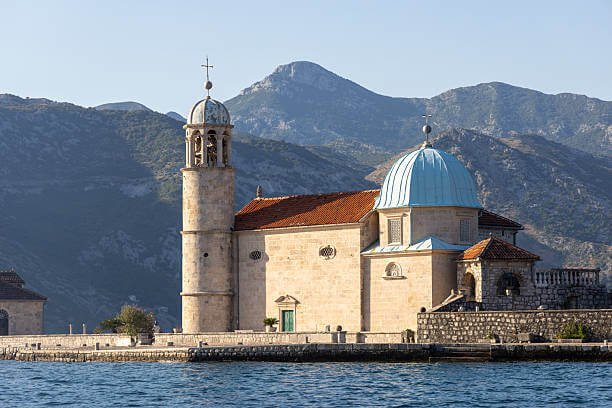
Our Lady of the Rocks (Gospa od Škrpjela) is the man-made island 150 metres offshore from Perast. Local legend holds that in 1452, sailors found an icon of the Virgin Mary on a rock in the bay. They vowed to lay a stone on the spot after every successful voyage. Over centuries, the rock grew into an island. The church built upon it contains 68 paintings by 17th-century Venetian master Tripo Kokolja, and the altar painting showing Our Lady is the most treasured religious icon in the Bay of Kotor.
The five-minute ferry from Perast (€5 return, boats depart every 30 minutes) brings you to one of the most atmospheric and genuinely moving places in Montenegro. Stand on the island with the bay and mountains surrounding you and the 17th-century church at your back. It is an extraordinary location.
Insider tip: Stay in Perast for dinner rather than returning to Kotor. The waterfront restaurants, particularly those with terrace tables on the water, serve excellent fresh seafood at prices 20–30% lower than Kotor. The evening atmosphere when the day tours leave is the best in the entire Bay of Kotor.
Relax on Montenegro’s Best Beaches
Adriatic sea temperature: July–August 25–27°C / September 23–24°C / October 20–21°C
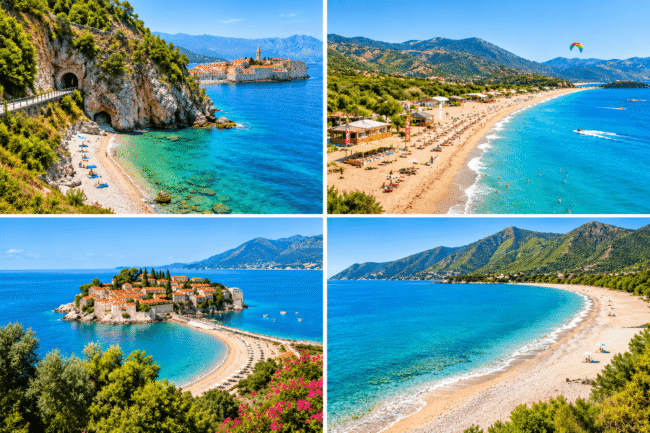
Best beaches for: Swimming Mogren Beach (Budva), Jaz Beach. Photography Sveti Stefan beach. Quiet Petrovac, Buljarica. Water sports Jaz Beach, Velika Plaža (Ulcinj)
Montenegro’s 293km Adriatic coastline has beaches ranging from the small pebbly coves of the Bay of Kotor to the sandy beaches of the Budva Riviera and the 13km Long Beach at Ulcinj. The best beaches:
Mogren Beach (Budva): Two connected pebble beaches accessible via a tunnel carved through the cliff face. Clear water, dramatic cliff setting, accessible on foot from Budva Old Town. Best Montenegro beach for swimming and scenery.
Jaz Beach (near Budva): A long sandy beach 3km from Budva with watersports, beach bars, and a large outdoor music venue that hosts international festivals. Montenegro’s most energetic beach environment.
Beaches near Sveti Stefan : The beaches on either side of the Sveti Stefan peninsula have the most photographed setting in Montenegro, the island visible offshore, the Budva Riviera stretching in both directions.
Buljarica Beach (near Petrovac): A long, relatively quiet sandy beach 5km south of Petrovac, with clear water and significantly fewer tourists than the Budva beaches.
Discover Budva Old Town
- Cost: Free to explore / Citadel entrance €2.50
- Time needed: 2–3 hours
- Distance from Kotor: 35km, 40 minutes by car
- Things to do in Budva Montenegro specifically:
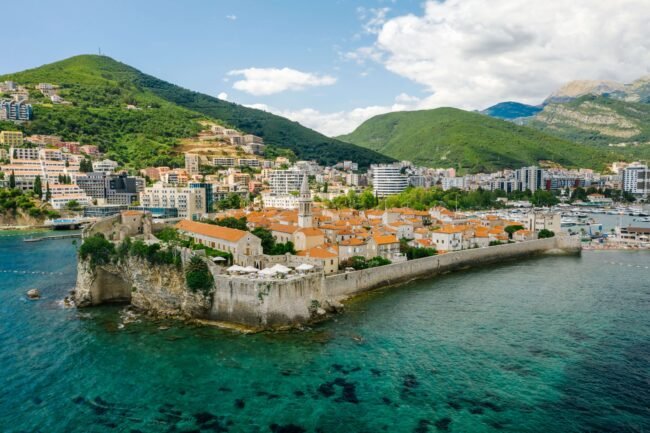
Budva has a reputation as Montenegro’s party capital, beach clubs, summer festivals, luxury hotels, and a nightlife scene that draws visitors from across the Balkans and Russia. This reputation unfairly overshadows what is actually a beautifully preserved medieval old town.
Budva Old Town sits on its own small peninsula extending into the Adriatic. The 15th-century Venetian-era city walls enclose a dense medieval city of narrow stone streets, Orthodox and Catholic churches, and the Budva Citadel, a 2nd-century BC fortification that offers some of the best sea views in Montenegro from its walls.
The Budva Citadel (Budvanska Citadela) highlights the raised fortification at the southern tip of the Old Town peninsula, with walls that drop directly into the sea on three sides. The interior houses a small museum and library, and the views from the ramparts take in the Old Town below, the surrounding beaches, and the open Adriatic.
Best time to visit: Early morning or evening. Budva Old Town receives significant cruise ship day traffic in peak season arriving by 8am or after 6pm gives a completely different experience.
Visit Sveti Stefan and Its Scenic Viewpoints
- Cost: Free (viewpoints) / Access to the island resort itself restricted to Aman Resort guests
- Best viewpoint: Church of St Sava hill (10-minute drive south of Sveti Stefan) sunset view
- Distance from Budva: 6km, 10 minutes by car
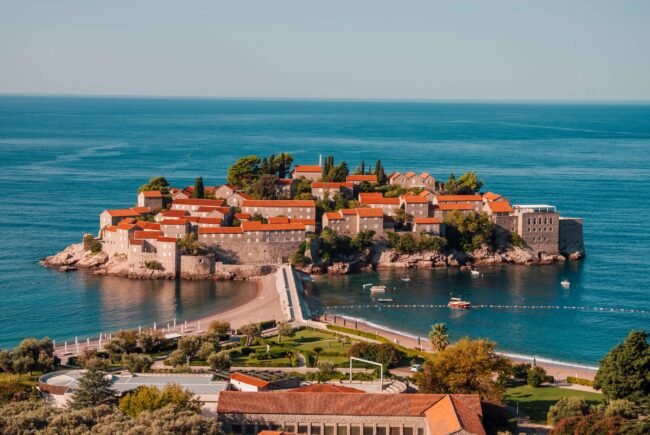
Sveti Stefan is Montenegro’s most photographed image, a small island of medieval stone houses on a narrow peninsula above the Adriatic, connected to the mainland by a sandy isthmus. The entire island has been converted into the Aman Sveti Stefan luxury resort, and access to the island itself is restricted to resort guests.
This sounds like a problem. It is not. The view of Sveti Stefan from the surrounding beaches and hillside viewpoints is entirely free, and it is one of the most dramatic coastal photographs in Europe. The Church of St Sava viewpoint, 10 minutes drive south of Sveti Stefan along the coast road, gives the classic elevated view of the island at golden hour; this is the photograph that appears on every Montenegro travel guide.
Best time: Arrive at the St Sava viewpoint 45 minutes before sunset. The light turns the stone buildings amber and the sea deepens from turquoise to navy. Bring wine.
Explore Durmitor National Park
- Cost: €3 park entry / camping available €5–10/night
- Base town: Žabljak (1,450m altitude, highest town in the Balkans)
- Distance from Kotor: 145km, approximately 2.5–3 hours by car
- Best time: June–September for hiking / December–March for skiing
Durmitor National Park is the surprise of Montenegro, a completely different landscape from the Adriatic coast, 145km north of Kotor into the Dinaric Alps. The park covers 390km² of glacial lakes, limestone peaks reaching 2,523m, dense forests, and the famous Black Lake.
The park contains 18 glacial lakes, the “mountain eyes” of Montenegrin legend. Black Lake is the most accessible and most beautiful. The Tara Canyon marks the park’s eastern border. Multiple hiking trails of varying difficulty leave directly from Žabljak, ranging from the 3.5km Black Lake circuit (easy, 1.5 hours) to multi-day alpine traverses.
For first-time visitors: Spend at least one night in Žabljak. The area transforms completely after day-trip visitors leave the mountain village atmosphere, cooler temperatures, and extraordinary night skies (at 1,450m with no light pollution) make Durmitor genuinely memorable.
Walk Around Black Lake
- Cost: Included in Durmitor National Park entry (€3)
- Trail length: 3.5km circuit
- Time: 1.5–2 hours at walking pace
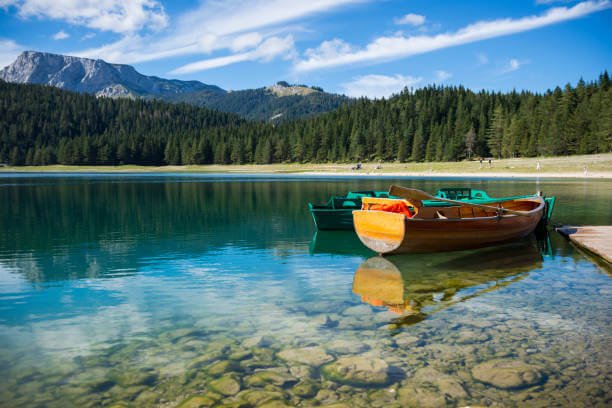
- Best time: Early morning the lake surface is completely still before 9am and reflects the surrounding peaks perfectly
Black Lake (Crno Jezero) sits at 1,416m in the heart of Durmitor National Park, 3km from Žabljak. Despite the name, the water is a vivid deep blue that shifts to turquoise in direct sunlight. The surrounding forest of Macedonian pine and beech covers the lower mountain slopes, with the dramatic Međed peak (2,287m) reflected in the calm water on clear mornings.
The 3.5km circuit around the lake is the most popular walk in Montenegro and genuinely beautiful. The path passes through dense forest, crosses streams, and reveals different mountain reflections as the angle of light changes throughout the day. The circuit is easy enough for any fitness level and suitable in both morning light (best photography) and late afternoon (fewer visitors).
Experience Tara Canyon and Đurđevića Tara Bridge
- Zipline cost: €20 per person
- White-water rafting: €35–80 depending on length (1-day or 2-day)
- Bridge access: Free
- Distance from Žabljak: 20km, 30 minutes
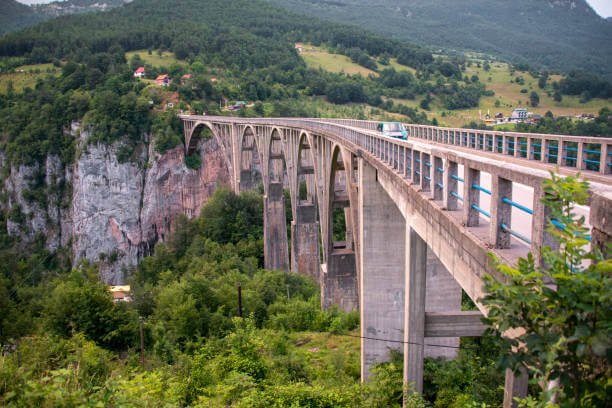
The Tara Canyon is the deepest canyon in Europe (1,300m at its deepest point) and the second deepest in the world after the Grand Canyon. The Tara Bridge built 1937–1940, a remarkable engineering achievement at 172m above the river, spans the canyon at one of its most dramatic points.
Zipline: A 170m zipline crosses from one side of the canyon to the other directly from the bridge. It costs €20 and takes approximately 30 seconds, the most adrenaline-efficient €20 in Montenegro.
White-water rafting: The Tara River offers some of the best white-water rafting in Europe. Day trips (€35–50) cover the most dramatic upper canyon sections. Two-day trips (€70–80) include overnight camping in the canyon. Book through operators in Žabljak or through your accommodation.
Drive the Scenic Durmitor Ring
- Cost: Car rental only (€25–50/day)
- Distance: 85km circular route
- Time: Full day (6–8 hours with stops)
- Starting point: Žabljak
The Durmitor Ring is an 85km panoramic road circuit through the most spectacular mountain scenery in Montenegro. The route connects Žabljak with the Tara Canyon, Piva Canyon, Piva Lake (a reservoir of extraordinary blue-green colour), and returns through the mountain interior.
Key stops on the Durmitor Ring:
- Đurđevića Tara Bridge and canyon viewpoints
- Piva Canyon comparable to the Tara in drama but less visited
- Piva Lake artificial reservoir with extraordinary turquoise colouring
- Plužine village small mountain town on the lake shore with excellent local food
- This route requires a car. It cannot be done by public transport. Allow a full day minimum.
Take a Boat Trip on Lake Skadar
- Cost: €15–25 for 2-hour boat excursions from Virpazar
- Distance from Podgorica: 40km south / from Kotor: 80km
- Best time: Spring (April–May) for lily blossoms / year-round for birdwatching
Lake Skadar is the largest lake in the Balkans 391km², split two-thirds in Montenegro and one-third in Albania. The Montenegrin side is protected as a national park. The lake is a UNESCO-listed wetland and one of Europe’s most important bird habitats 280 bird species including the rare Dalmatian pelican.
Boat trips from the small village of Virpazar cover the best sections of the lake water lily fields (spectacular April–June when the lilies bloom), ruined medieval island monasteries, fishing villages, and the mountain-backed northern shore. Local captains know the pelican nesting areas and timing the departure for early morning significantly improves wildlife sightings.
Wine tasting: The Skadar Lake area is Montenegro’s main wine-producing region. Vranac Montenegro’s signature red is produced from vineyards around the lake. Several wineries near Virpazar offer tastings with advance notice.
Visit Lovćen National Park
- Cost: Free entry / Njegoš Mausoleum entrance €3
- Distance from Kotor: 25km, 45 minutes (via the famous 25-hairpin serpentine road)
- Best time: Late afternoon for views of the Bay of Kotor catching sunset light
Lovćen National Park sits on the mountain directly above Kotor, the dramatic peak visible from the old town and the bay. The park gives its name to Montenegro itself (Crna Gora Black Mountain named for the dark appearance of Lovćen’s peaks in certain light).
The Njegoš Mausoleum on Jezerski Vrh (1,660m) is the park’s cultural centrepiece the tomb of Petar II Petrović-Njegoš, Montenegro’s greatest poet and bishop-prince, built into the mountain summit by Ivan Meštrović. The 461 steps from the car park to the mausoleum entrance are rewarded with the most panoramic views in Montenegro: the Bay of Kotor one side, the Adriatic coast to Budva and beyond the other, and on clear days the Albanian Alps to the south.
The Kotor serpentine road: The road from Kotor up to Lovćen winds through 25 hairpin bends up a near-vertical mountain face. This road completely free is one of the most dramatic short drives in Europe and worth the journey even if you go no further.
Visit Ostrog Monastery
- Cost: Free
- Distance from Podgorica: 40km / from Kotor: 90km
- Dress code: Covered shoulders and knees required (scarves available at the entrance)
- Best time: Weekday mornings avoid summer weekends when hundreds of pilgrims queue
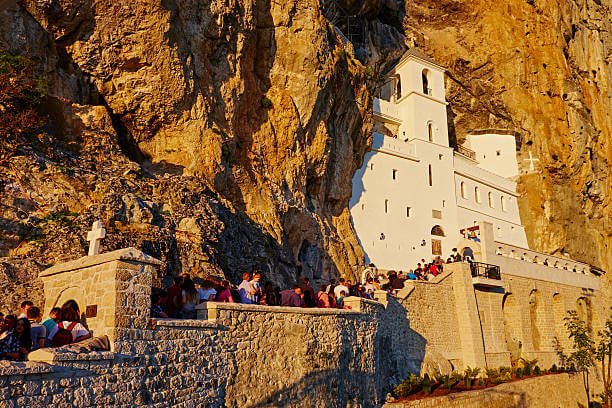
Ostrog Monastery is the most extraordinary religious site in Montenegro and one of the most remarkable in the Orthodox world. Founded in 1665 by Saint Basil of Ostrog, the monastery is literally carved into a limestone cliff face at 900 metres above the Zeta Valley, the white-plastered church buildings embedded in the rock look, from a distance, as though they have grown out of the mountain.
The monastery is an active Serbian Orthodox pilgrimage site; the relics of Saint Basil, believed to have healing powers, attract pilgrims from across the Orthodox world. A 1942 Italian grenade hit the monastery wall and failed to explode; the unexploded grenade is still embedded in the church wall and visible to visitors.
The approach road is one of Montenegro’s most dramatic narrow switchbacks rising through dramatic scenery with the cliff face and white monastery visible above throughout the ascent.
Discover Herceg Novi
- Cost: Free to explore
- Distance from Kotor: 35km, 40 minutes
- Why visit: Montenegro’s most underrated coastal town skipped by most visitors who focus on Kotor and Budva
Herceg Novi sits at the entrance to the Bay of Kotor where the bay meets the open Adriatic. The old town cascades down steep terraced hillsides to a 5km waterfront promenade the Šetalište Dva Brata that is among the most pleasant coastal walks in the entire Bay of Kotor.
The fortifications Kula Fort (Ottoman era), the Forte Mare sea fortress, and the Spanish Fort above the town reflect Herceg Novi’s position as a contested gateway to the bay across multiple empires. The clock tower in the main square (Trg Nikole Đurkovića) is the town’s most recognizable landmark.
Why most visitors miss it: Herceg Novi requires crossing the bay by ferry (€5, Kamenari–Lepetane ferry, 5-minute crossing) or driving around the entire bay (70km). Both take 30–45 minutes from Kotor. The ferry is an easy and atmospheric way to reach it.
Explore Bar and Stari Bar Old Town
- Cost: Stari Bar ruins entry €2
- Distance from Kotor: 75km, 1 hour
Things to do in Bar Montenegro specifically:
Bar is Montenegro’s largest port and the main ferry connection to Italy (Bari and Ancona). The modern city is functional rather than beautiful. But 4km inland from the coast is Stari Bar (Old Bar) a ruined medieval town set on a hillside with an extraordinary atmosphere.
Stari Bar was Montenegro’s most important medieval city, abandoned after the 1979 earthquake damage and now slowly being excavated and studied. Walking through the ruins of overgrown stone buildings, Byzantine churches, Ottoman hammams, ancient olive presses gives a different and more reflective experience of Montenegro’s history than the more polished Kotor or Budva.
The Stara Maslina (Old Olive Tree) near Mirovica village, 2km from Stari Bar, is estimated at over 2,000 years old, possibly the oldest olive tree in the world. Access is free and the tree enormous, gnarled, still producing olives is a genuinely moving sight.
Visit Podgorica, Montenegro’s Capital
Things to do in Podgorica Montenegro specifically:
- Millennium Bridge (Milenijumski Most) the city’s most photogenic structure, over the Morača River
- Cathedral of Christ’s Resurrection completed 2013, largest Orthodox church in the Balkans
- Stara Varoš (Old Town) small Ottoman quarter with a clock tower and old mosques
- Gorica Forest Park urban forest park above the city with walking trails
Podgorica is primarily a transport hub rather than a tourist destination. Most visitors pass through on their way between the airport and the coast or mountains. However, the riverside walk along the Morača, the Cathedral, and the cafés of the Slobode boulevard are worth an afternoon stop if you are transiting.
Relax in Petrovac
- Distance from Budva: 22km south / 30 minutes
- Why visit: Montenegro’s most pleasant small coastal town the opposite of busy Budva
Petrovac is a small coastal village on the Budva Riviera with a curved beach, a 16th-century Venetian fortress, and an atmosphere of genuine coastal calm that is impossible to find in Budva in peak season. The 400m curved pebbly beach is excellent for swimming. The waterfront promenade (Riva) has café tables that extend almost to the water’s edge.
Buljarica Beach: 3km south of Petrovac is a 1km long sandy beach that is significantly quieter than any beach near Budva, with clear water and a few beach bars.
Explore Ulcinj and Velika Plaža
- Distance from Bar: 25km south / 30 minutes
- Velika Plaža: 13km long sandy beach (longest in Montenegro)
- Best for: Kite surfing, long beach walks, quiet swimming
Ulcinj is Montenegro’s southernmost town, 20km from the Albanian border. The Ulcinj Old Town is a small but atmospheric Ottoman-era fortified settlement above the Adriatic. The town has a larger Muslim Albanian community than elsewhere in Montenegro; the cultural atmosphere is noticeably different from northern Montenegro.
Velika Plaža (Long Beach) stretches 13km from the edge of Ulcinj south to the Albanian border, the longest sandy beach in Montenegro and one of the longest on the entire Adriatic. The consistent winds make it the best location for kite surfing in Montenegro. Outside of the Albanian summer visitor peak (July–August), large sections of the beach are virtually empty.
Taste Traditional Montenegrin Food and Local Specialties
- Average meal cost: €8–15 at local restaurants / €15–25 at waterfront restaurants
- Must-try dishes: Grilled fish and calamari, Ćevapčići, lamb under the sač, Priganice (fried dough), Njeguški pršut (air-dried ham)
- Must-try wines: Vranac (local red), Krstač (local white from Lake Skadar area)
- Montenegrin food reflects the country’s geography: coastal cuisine built around Adriatic seafood in the south, hearty mountain food based on grilled meat, dairy, and smoked products in the north.
Coastal food highlights:
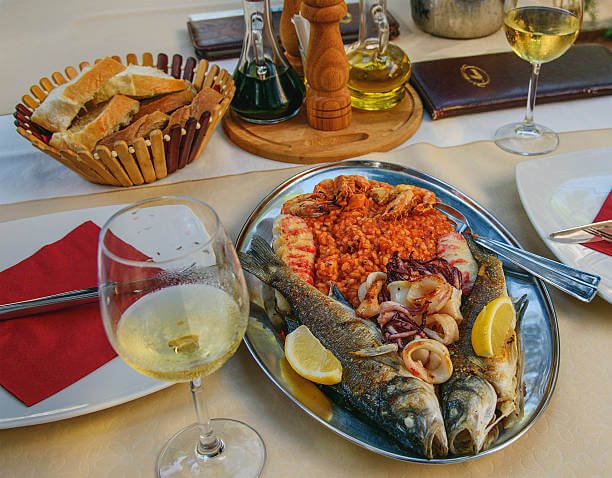
Fresh grilled fish from the Adriatic is the most reliable and most satisfying meal on the Montenegro coast. Order the catch of the day (riba na žaru) and ask which fish came in that morning. Grilled calamari (lignje na žaru), black risotto (crni rižoto), and fish soup (riblja čorba) are the essential coastal dishes.
Njeguški pršut is Montenegro’s finest food product air-dried cured ham from the village of Njeguši in Lovćen National Park, with a smoky, concentrated flavour that rivals Italian prosciutto. It is served in virtually every restaurant in Montenegro and is available to take home from market stalls.
Vranac wine Montenegro’s signature red grape produces dark, tannic, full-bodied wine that pairs perfectly with grilled meat and aged cheese. The best Vranac comes from the Lake Skadar area.
How to Get Around Montenegro
| Transport | Cost | Best For | Limitations |
|---|---|---|---|
| Rental car | €25–50/day | Full country — coast + mountains | Mountain roads narrow, parking in old towns difficult |
| Public bus | €3–12/journey | Coastal towns — Kotor, Budva, Bar, Herceg Novi | Durmitor, Lake Skadar, Lovćen inaccessible |
| Organised day tours | €25–65/tour | Durmitor, Ostrog, Lake Skadar without a car | Fixed schedule, group pace |
| Kamenari–Lepetane ferry | €5 car / €1 person | Crossing the Bay of Kotor to Herceg Novi | Bay crossing only |
| Dubrovnik bus | €15–20 return | Day trip from Dubrovnik to Kotor | Long day (2.5 hours each way) |
Renting a Car in Montenegro
A rental car is the single best decision for experiencing Montenegro fully. The coastal road between Herceg Novi and Ulcinj is straightforward. The mountain roads to Durmitor and Lovćen are narrow with dramatic drops drive carefully and do not rush. Parking in Kotor Old Town is impossible use the large car park outside the Sea Gate.
Traveling by Bus Between Cities
Montenegro’s bus network (primarily operated by GetByBus connects all coastal towns reliably. Kotor to Budva costs approximately €3–5 and takes 40 minutes. Kotor to Podgorica takes approximately 1.5 hours and costs €8–12. The bus is the most affordable transport for the coastal route but does not reach inland highlights.
Getting Around Without a Car
You can have a good Montenegro trip without a car if you stay in Kotor as a base the Bay of Kotor boat tours reach Perast and Our Lady of the Rocks, buses reach Budva and Herceg Novi, and organised day tours reach Durmitor, Ostrog, and Lake Skadar. You will miss the freedom to stop at viewpoints and explore smaller villages at your own pace, but the main highlights are all accessible.
How Many Days Do You Need in Montenegro?
| Duration | What You Can Cover | Base |
|---|---|---|
| 3 days | Kotor Old Town + Fortress, Bay of Kotor boat trip, Perast, Budva, Sveti Stefan | Kotor |
| 5 days ⭐ | All of the above + Durmitor National Park, Tara Canyon, Ostrog Monastery | Kotor + Žabljak |
| 7 days | All of the above + Lake Skadar, Lovćen, Herceg Novi, Petrovac, Bar | Kotor + Žabljak + Virpazar |
| 10 days | Complete Montenegro — all regions, Ulcinj, Durmitor Ring, winery visits | Multiple bases |
Best Time to Visit Montenegro
| Season | Weather | Crowds | Prices | Best For |
|---|---|---|---|---|
| Spring (Apr–May) | 18–24°C | Low–Moderate | Low | Hiking, sightseeing, Lake Skadar lilies |
| Early Summer (Jun) | 25–28°C | Moderate | Medium | Best balance — warm sea, manageable crowds |
| Peak Summer (Jul–Aug) | 32–38°C | Very High | High | Beach only — too hot for hiking or sightseeing |
| September ⭐ | 26–30°C | Moderate | Medium | Best overall — warm sea, fewer crowds |
| October ⭐ | 20–24°C | Low | Low | Hiking, photography, towns without crowds |
| Winter (Dec–Mar) | 5–12°C coast / snow mountains | Very Low | Very Low | Durmitor skiing, Kotor without tourists |
Practical Travel Tips for Montenegro
Currency and Payment Methods
Montenegro uses the Euro (€) despite not being an EU member. Cash is essential many restaurants, guesthouses, and attractions in smaller towns and national parks do not accept cards. ATMs are available in all towns but limited in remote mountain areas. Always carry €50–100 in cash when heading to Durmitor or rural areas.
Driving and Mountain Roads
The coastal road (Jadranska magistrala) is well-maintained and easy to drive. Mountain roads particularly to Durmitor, Lovćen, and Ostrog are narrow with significant drops and no guardrails in many sections. Drive slowly, use the horn on blind bends (standard practice in Montenegro), and never attempt mountain roads at night unless very experienced.
What to Pack
- Coast: Light clothing, swimwear, sun protection, walking shoes for old towns
- Mountains (Durmitor): Warm layers (even in summer temperatures drop significantly at altitude), waterproof jacket, sturdy walking shoes or hiking boots, water bottle
- Both: Power adapter (EU type C/F), travel insurance, EU or international health insurance card
Booking Tips
Book accommodation in Kotor and Budva 4–8 weeks ahead for June, July, August, and September. Žabljak (Durmitor area) has less accommodation pressure 1–2 weeks ahead is usually sufficient. Day tours from Kotor to Durmitor, Ostrog, and Lake Skadar can be booked 1–3 days in advance through Kotor tour operators or via GetYourGuide.
Final Thoughts: Best Things to Do in Montenegro
Montenegro is the Balkans in miniature, everything the region does well, compressed into a country small enough to drive across in an afternoon but diverse enough to spend a month exploring without running out of things to discover.
The Bay of Kotor is among the finest enclosed bays in Europe. Durmitor is among the finest mountain national parks in the Balkans. The Tara Canyon is the deepest in Europe. Sveti Stefan is among the most photographed coastal scenes in the Mediterranean. Ostrog Monastery is simply unique.
None of these things to do in Montenegro require large budgets, complicated logistics, or advance planning beyond booking a place to sleep. They require arriving and then staying long enough to move past the first impression.
Visit Montenegro now. It is still, despite growing tourism, genuinely and unexpectedly extraordinary.
Visit the official Montenegro tourism website for official information on entry requirements, national park passes, and seasonal event schedules.
What Is Montenegro Famous For?
Montenegro is famous for its beautiful Adriatic coastline, historic towns, Bay of Kotor, scenic mountains, and national parks.
What Food Is Montenegro Famous For?
Montenegro is known for grilled meats, fresh seafood, Njeguški pršut (smoked ham), local cheeses, and traditional dishes like kačamak.
What Should You Be Careful of in Montenegro?
Be careful on winding mountain roads, watch your belongings in crowded tourist areas, and check parking rules and local driving regulations.
Is Montenegro Friendly to Americans?
Yes, Montenegro generally welcomes American tourists. English is commonly spoken in popular tourist destinations, especially in hotels, restaurants, and tour services.
Which Is Nicer, Albania or Montenegro?
Both are worth visiting. Montenegro is known for its dramatic mountains, historic coastal towns, and Bay of Kotor, while Albania offers beautiful beaches, historic sites, and varied landscapes.
Is Croatia or Montenegro Better for a Holiday?
Croatia offers more well-known coastal destinations and historic cities, while Montenegro is a great choice for compact road trips, mountain scenery, and charming coastal towns. The better option depends on your travel style and budget.
