

Where to Stay in Montenegro: 7 Best Areas and Towns
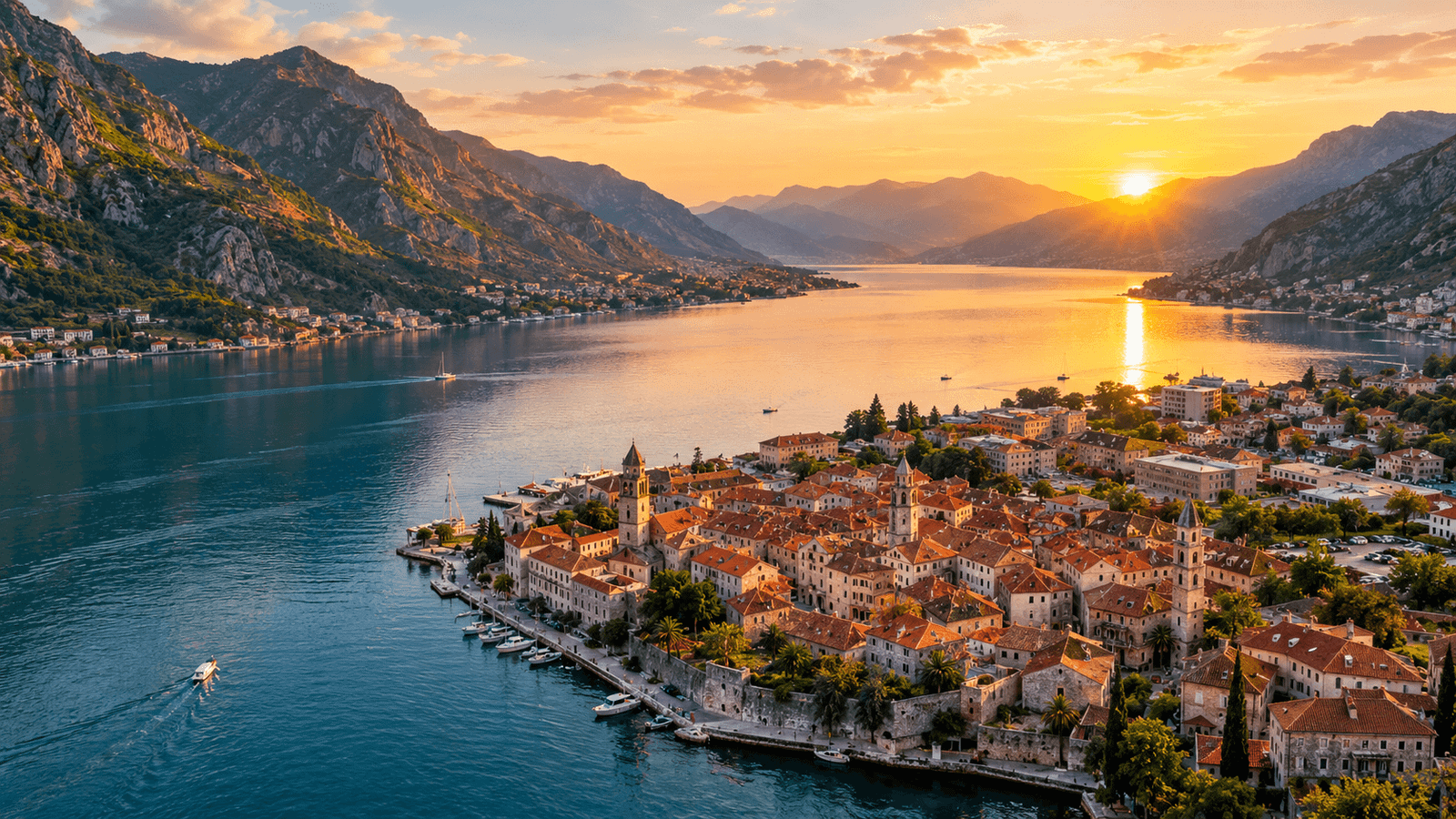
Montenegro is small, but it packs a lot into a few hours of driving. You can wake up beside a fjord-like bay, swim at a sandy beach after lunch, and be among glacial lakes and mountain peaks the next day. That variety is exactly why choosing where to stay in Montenegro matters so much. The wrong base can mean long transfers, noisy nights or a beach holiday with no good beach.
Quick answer: Stay in Kotor for history and first-time sightseeing, Budva for beaches and nightlife, Tivat for modern waterfront comfort, Perast for a quiet romantic escape, Ulcinj for long sandy beaches and lower prices, Žabljak for mountain adventures, and Podgorica for city stays and flight connections.
The best base depends on four things: your budget, how you will get around, the season you travel in, and what you want to do each day. This guide compares each area so you can choose with confidence.
Table of Contents
Where Is the Best Place to Stay in Montenegro?
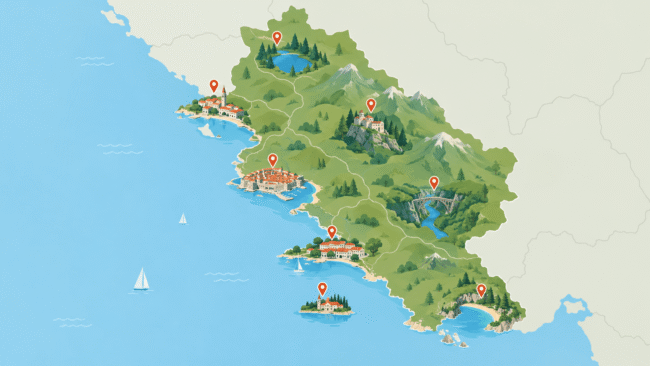
There is no single best place, but there is a best place for each type of trip. Here is a quick comparison before we go deeper.
| Area | Best for | Typical budget | Main drawback |
|---|---|---|---|
| Kotor | First-time visitors, history | Mid to high | Crowds, stairs, parking |
| Budva | Beaches, nightlife | Low to high | Summer traffic and noise |
| Tivat | Modern comfort, airport access | Mid to luxury | Little historic charm |
| Perast | Quiet, romance | High | Few rooms, no nightlife |
| Ulcinj | Sandy beaches, value | Low to mid | Far from the north coast |
| Žabljak | Hiking, nature | Low to mid | Remote, changeable weather |
| Podgorica | City stays, flights | Low to mid | Not a resort base |
Best by travel style:
- First-time visitors: Kotor
- Beaches: Budva Riviera or Ulcinj
- History: Kotor and Perast
- Nightlife: Budva
- Nature and hiking: Žabljak
- Budget stays: Ulcinj, Žabljak and Podgorica
Where to Stay in Montenegro: Best Towns and Areas
Kotor: Best for First-Time Visitors and History
If you are wondering where to stay in Kotor, Montenegro, the answer depends on whether you want atmosphere or value. Kotor Old Town is a UNESCO-listed maze of stone lanes, small squares, churches and cafes, set at the foot of steep mountains. Together with the surrounding bay, it forms the Natural and Culturally-Historical Region of Kotor, a UNESCO World Heritage property.
Staying inside the walls puts you within walking distance of restaurants, galleries and the bus station. It is also the easiest base for boat trips around the bay and day trips to Perast, Cetinje and Lovćen National Park. Climbing the fortress path (around 1,350 steps) early in the morning rewards you with the best view of the bay.
Where to stay in Kotor:
- Inside the Old Town: Best atmosphere, but rooms are smaller and pricier.
- Dobrota: A calm waterfront strip a short taxi ride away, with more apartments and better value.
- Prčanj: A quieter village with local guesthouses and bay views.
Drawbacks: Cruise-ship days can make the Old Town very busy, there are many stairs, and parking is limited. If you drive, ask your host about parking before booking.
Budva: Where to Stay in Montenegro for Beaches and Nightlife
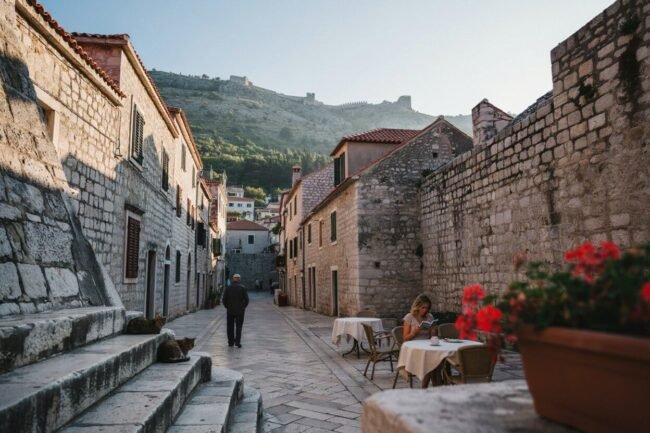
When people ask where to stay in Budva, Montenegro, the answer usually comes down to how much energy they want around them. Budva is the country’s busiest resort town, with a walled Old Town, a long promenade, restaurants, beach clubs and the liveliest nightlife in Montenegro.
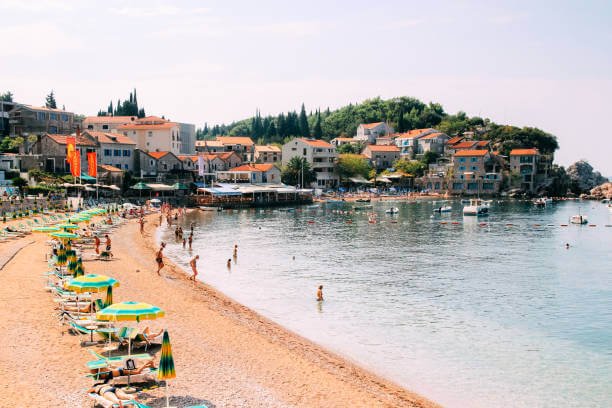
The Budva Riviera also gives you easy access to a string of beaches, including Mogren, Jaz and the coast toward Sveti Stefan. Local buses connect many of them, so you can beach-hop without a car. Budva also has a wider choice of mid-range hotels than the Bay of Kotor.
Tip: If you want sleep, choose a hotel or apartment a few streets back from the Old Town and the main beachfront.
Drawbacks: Expect heavy traffic, crowds and higher prices in July and August. Parts of town outside the Old Town can feel generic and overbuilt.
Tivat: Best for Modern Waterfront Stays
Tivat is the newest and most polished town in the Bay of Kotor. Its centrepiece is the Porto Montenegro marina, with superyachts, waterfront restaurants, boutiques and upscale hotels. It is calm, clean and convenient, and it is home to Tivat Airport, so you can be at your hotel within minutes of landing.
Tivat is a good fit for couples, remote workers and travellers who value comfort over medieval charm. It is also well placed for the Luštica Peninsula, Kotor and Budva, all within roughly half an hour to an hour by road.
Drawbacks: It has little historic atmosphere, and prices inside the marina area can be high. Look for accommodation in the surrounding streets for better value.
Perast: Best for a Quiet and Romantic Stay
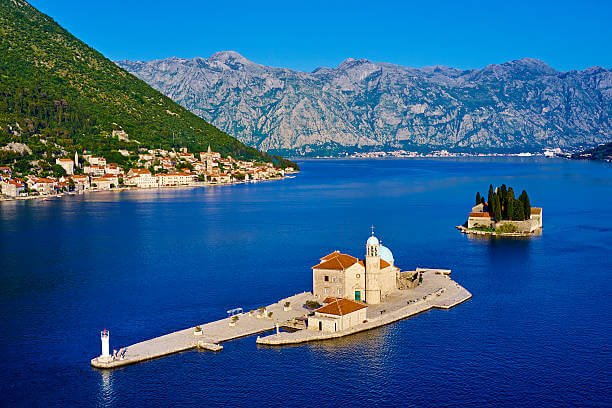
Perast is a tiny Baroque town stretched along a single waterfront street. It is pedestrian-friendly, quiet in the evenings once the day-trippers leave, and has a famous view of the islet of Our Lady of the Rocks. It is one of the most romantic places to stay in Montenegro, and a favourite with photographers.
Many stays here are boutique hotels in restored stone palaces, and some have water-facing balconies or access to the sea. Small boats run to the islets from the waterfront.
Drawbacks: There are few rooms, prices are high, nightlife is almost non-existent and you will need to park in lots at the edge of town.
Ulcinj: Best for Sandy Beaches and Budget Options
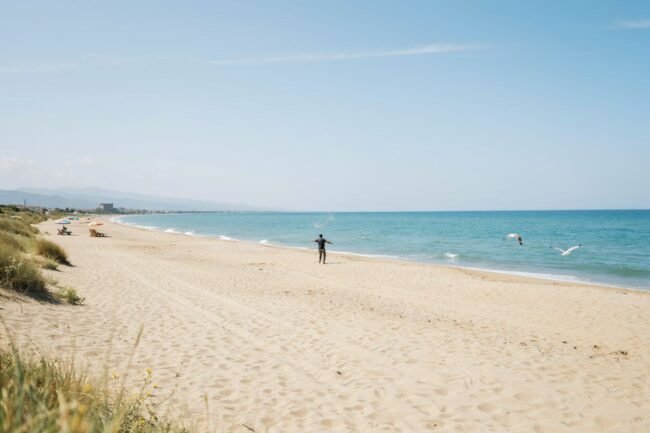
If your idea of a perfect holiday is a long, soft sandy beach, Ulcinj is the place. Velika Plaža stretches for around 12 kilometres, the shallow water suits families, and the sea is often among the warmest on the coast. Nearby, the river island of Ada Bojana is known for fish restaurants, a relaxed atmosphere and a naturist area.
Ulcinj has Ottoman and Albanian influences that give it a different feel from the northern coast, visible in the architecture, food and daily rhythm. Accommodation is usually cheaper than in Kotor or Budva, and you will find a wide range of apartments, hotels and some all-inclusive resorts.
Drawbacks: It is the furthest town from the Bay of Kotor, so sightseeing trips take longer. The town itself has fewer major attractions than Kotor or Budva.
Žabljak: Best for Mountains and Outdoor Adventures
Žabljak sits at around 1,450 metres and is the gateway to Durmitor National Park, a UNESCO World Heritage site. Trails to the Black Lake start close to town, and the area is known for hiking, scenic drives, rafting on the Tara River and winter sports.
It is also a welcome escape from the summer heat on the coast. Accommodation is mostly guesthouses, apartments and mountain lodges, and prices are generally lower than at the seaside.
Drawbacks: Žabljak is remote, mountain weather can change quickly even in summer, and a car makes exploring far easier. Always pack layers and waterproof footwear.
Podgorica: Best for City Stays and Transport Connections
Podgorica is not a resort, but it is practical. It has restaurants, shops, everyday amenities and an international airport. It is also a convenient base for Lake Skadar, wineries and trips between the coast and the northern mountains.
Hotels are often cheaper than on the coast, which makes the city useful for a short stopover, a late flight or a budget night before heading on. For most travellers, though, it works better as a one- or two-night stop than as the base for a whole holiday.
Where to Stay in Bar, Montenegro
Bar is a working port town, so it is not the prettiest base, but it has real advantages. Stari Bar, the ruined medieval town inland, is one of the most important archaeological sites in the Balkans. Lake Skadar is within easy reach, and the Belgrade–Bar railway connects the coast to Podgorica and the mountains.
Most beaches around Bar are pebbly, so if you want long sand, Ulcinj is the better choice. Bar suits travellers who want sightseeing, nature and a more local atmosphere, and those who plan to use trains and buses instead of a car.
Where to Stay in Montenegro for Beaches
If you are choosing where to stay in Montenegro for beaches, remember that not all beaches are alike. Much of the Bay of Kotor is rocky or pebbly, with swimming from platforms and small shores rather than wide sandy stretches.
- Budva Riviera: Lively beaches with sunbeds, restaurants and nightlife. Jaz and Mogren are popular choices.
- Ulcinj: The best option for long sandy beaches and shallow water.
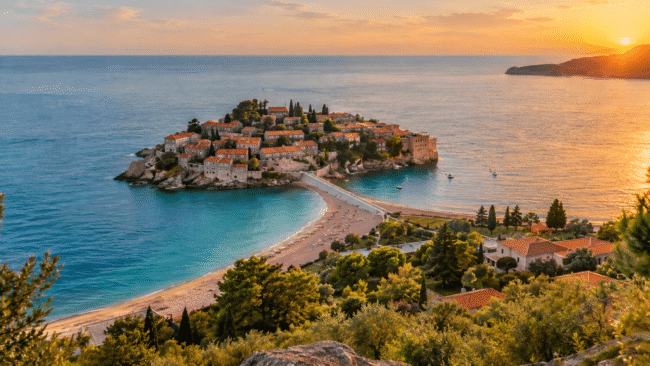
- Sveti Stefan area: Famous for its coastal scenery and public beaches with a view of the islet.
- Tivat and the Bay of Kotor: Good for waterfront stays and swimming, but not for wide sandy beaches.
Sand, pebble or rock? Sand is best for families with small children, pebbles keep the water clearer and are common in Bar and Petrovac, and rocky shores suit swimmers who bring water shoes.
Where to Stay in Montenegro for First-Time Visitors
For most first-time visitors, Kotor is the strongest base. It combines history, scenery, boat trips and good transport links, and it puts Perast, Tivat, Budva and Lovćen all within a short journey.
Choose Budva instead if your priority is beaches and nightlife. If you have a week or more, consider splitting your stay: three or four nights in the Bay of Kotor, a few nights on the Budva Riviera, and two or three nights in the mountains around Žabljak. Moving every night is tiring, so aim for no more than two or three bases.
Where to Stay in Montenegro: Kotor or Budva?
This is the most common question, and the two towns are only about 30 to 40 minutes apart.
| Feature | Kotor | Budva |
|---|---|---|
| Atmosphere | Historic, scenic, calmer evenings | Energetic, social, beach-focused |
| Beaches | Rocky and pebbly bay shores | Many beaches, some sandy |
| Nightlife | Relaxed bars and cafes | The liveliest in the country |
| Crowds | Cruise-ship days are busy | Very busy in July and August |
| Costs | Old Town rooms can be pricey | Wide range from budget to luxury |
| Transport | Walkable, easy bus links | Walkable, good local buses |
Our recommendation: Choose Kotor if you love history, views and quiet evenings. Choose Budva if you want swimming, restaurants and a night out. If you cannot decide, base yourself in Kotor for sightseeing and spend a day or two on the Budva Riviera.
Where to Stay in Montenegro Without a Car
You can see a lot of Montenegro without a car if you pick your base carefully.
- Choose central Kotor or Budva. Both are walkable and have good bus connections along the coast.
- Stay near the bus station if you will rely on intercity buses. It saves time and luggage-hauling.
- Use organised tours for places that are harder to reach, such as Ostrog Monastery or Lake Skadar.
- Consider Bar for its railway link to Podgorica and Lake Skadar.
The main limitation is the mountain interior. Places like Durmitor and Biogradska Gora are much harder to explore on public transport, so if you want to hike in the north, you will probably want to rent a car or book a transfer.
Types of Accommodation in Montenegro
- Hotels and boutique hotels: Common in Kotor, Perast, Budva and Tivat, many in renovated stone buildings.
- Apartments and holiday rentals: Often the best value, especially for families and longer stays.
- Hostels and budget guesthouses: Available in Kotor, Budva, Ulcinj and Žabljak.
- Beachfront resorts and luxury stays: Found along the Budva Riviera, Tivat and the Bay of Kotor.
- Mountain lodges and eco-stays: Popular around Žabljak and other mountain areas.
How to Choose the Right Area and Book Your Stay
- Match the area to your itinerary and travel style. Decide whether you want beaches, history, nightlife, nature or a mix.
- Compare peak and shoulder seasons. June and September usually give pleasant weather, fewer crowds and lower prices than July and August. Check our guide to the best time to visit Montenegro before you lock in your dates.
- Check practical details. Look at parking, stairs, walkability and distance from the bus station or marina.
- Read recent reviews and cancellation terms. Flexible cancellation is useful if your plans might change.
- Book early for summer. Popular properties can fill months ahead.
- Think about your airport. Tivat is closest to the Bay of Kotor and Budva, while Podgorica is better for Ulcinj, Bar and the north. Dubrovnik Airport in Croatia is also an option for Herceg Novi.
For official visitor information, you can also check the Montenegro National Tourism Organisation.
Final Thoughts
The best place to stay in Montenegro is the one that fits how you like to travel. Choose Kotor for history and first-time sightseeing, Budva for beaches and nightlife, Tivat for modern comfort, Perast for romance, Ulcinj for sandy beaches and value, Žabljak for mountain adventures, and Podgorica for city stays and flight connections.
If you can, visit in June or September, which are usually the best months to visit Montenegro, limit yourself to two or three bases, and check parking and transport before you book.
Where is the best place to stay in Montenegro?
Kotor is the best all-round choice for most travellers because of its history, scenery and transport links. Budva is better for beaches and nightlife, Ulcinj for long sandy beaches, and Žabljak for mountains.
Where should first-time visitors stay in Montenegro?
First-time visitors should usually stay in Kotor or the Bay of Kotor. It is compact, scenic and convenient for day trips to Perast, Budva, Cetinje and Lovćen.
Where should you stay in Montenegro for beaches?
The Budva Riviera is best for lively beaches, and Ulcinj is best for long sandy beaches. The Bay of Kotor is better for scenery and swimming than for sandy beach days.
Is Kotor or Budva better to stay in?
Kotor is better for history, views and quiet evenings, while Budva is better for beaches, restaurants and nightlife. The two are only about 30 to 40 minutes apart, so you can easily visit one from the other.
Where should you stay in Bar, Montenegro?
Stay near the marina or beach for convenience, or choose a hotel in or near Stari Bar if you want a historic setting. Bar is also a good base if you plan to use trains and buses to reach Lake Skadar and Podgorica.
Can you stay in Montenegro without a car?
Yes. Choose a walkable base such as Kotor or Budva, use buses along the coast and book tours for harder-to-reach places. Mountain areas like Durmitor are much easier with a car or a transfer.
